Focused arrival windows
Useful updates and clear arrival timing.
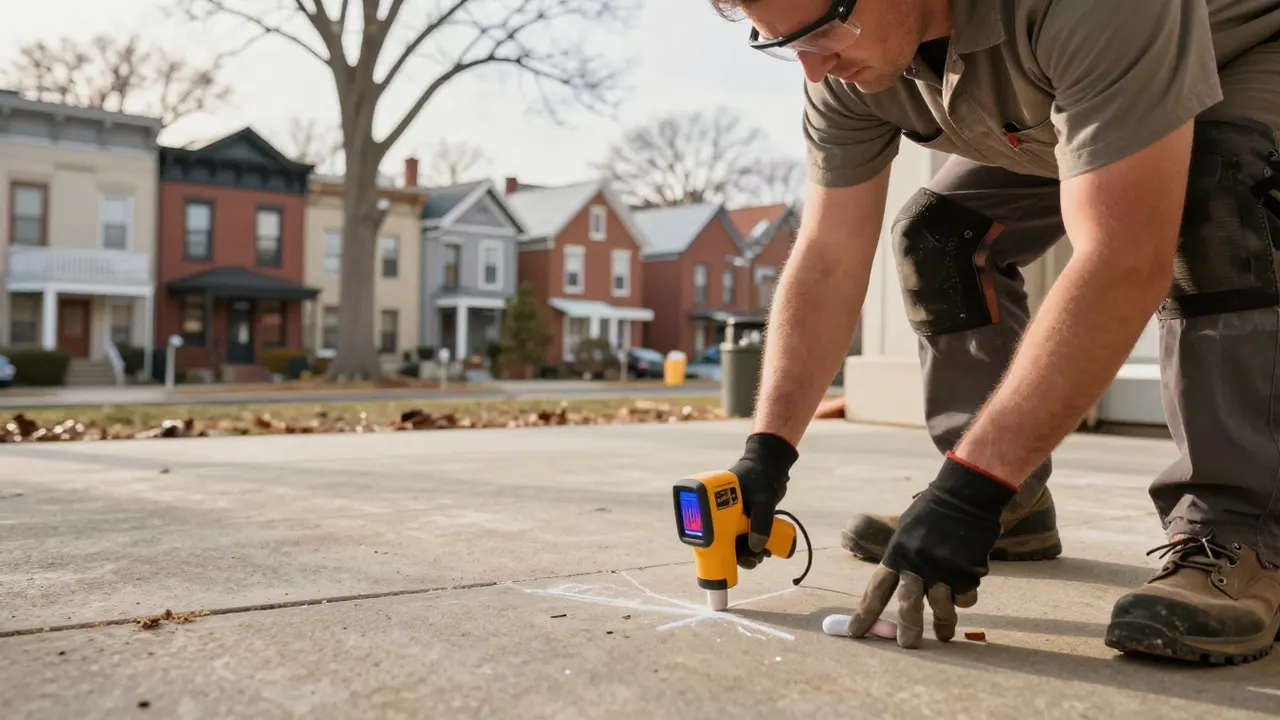
Water Leak Detection in Pittsburgh is the fastest way to stop hidden leaks from wrecking your home. We find slab leaks, underground pipe leaks, and water line leaks with acoustic listening devices and thermal imaging cameras. If you are searching for water leak detection near me Pittsburgh, our team responds 24/7 across Allegheny County. We locate the leak, fix it, and test the line before we leave.
Useful updates and clear arrival timing.
Review the approach and price before deciding.
Equipped vehicles and respectful cleanup.
Neighbors serving neighbors with follow-through.
Every detection visit covers a full-system check and a written summary. Repair is quoted separately so you can decide before we cut anything.
We pressurize your plumbing with a pressure testing kit and watch for drops. This tells us if the leak is on the supply side or the drain side. Takes about 20 minutes and narrows the search fast.
Acoustic listening devices pick up the sound of escaping water. Thermal imaging cameras show temperature differences behind walls and under floors. Together they pinpoint the leak to within a few inches.
We use moisture meters to map how far water has traveled. This matters because a leak in one room can show up as a stain three rooms away. You get a clear picture of the damage zone.
You receive a summary of what we tested, what we found, and what it takes to fix it. Photos and meter readings are included. This is the document your insurance adjuster will want to see.
Share what is happening and receive a clear next step from the local team.
Water Leak Detection in Pittsburgh is a diagnostic service that pinpoints where water is escaping from your plumbing system before it causes structural damage. We use acoustic listening devices, thermal imaging cameras, and pressure testing kits to hear and see leaks through concrete, drywall, and soil. A hidden water leak can waste hundreds of gallons a day and quietly rot framing, warp floors, and spike your water bill. We find the exact spot so repairs are surgical, not exploratory.
Pittsburgh's older housing stock, clay soil, and freeze-thaw cycles make underground pipe leaks and slab leaks common. Copper pipe from the 1950s corrodes; PEX tubing in newer builds can fail at fittings. If your water bill jumped and you hear water running when nothing is on, you need water leak detection Pittsburgh homeowners trust. We also handle water leak repair in Pittsburgh PA for pool lines, sewer line leaks, and foundation leaks. One call covers detection through repair.
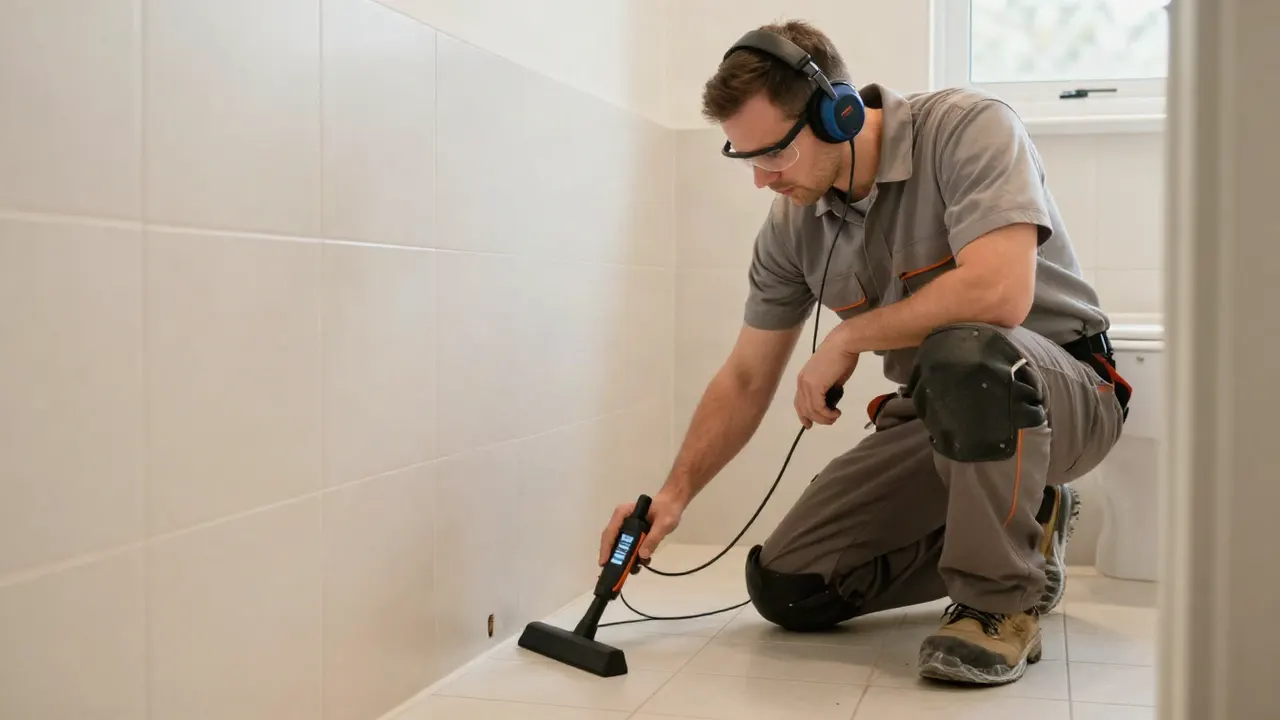
You call (412) 939-1638 and describe what you see: a spike in the water bill, a warm spot on the floor, or water running with everything off. We ask a few questions and schedule a same-day or next-morning visit. Most calls are booked within two hours.
A licensed technician walks the property with moisture meters and a thermal imaging camera. We check the meter, shut-off valves, visible piping, and any stained ceilings or buckled floors. This takes 20 to 30 minutes and tells us where to focus.
We pressurize the system with a pressure testing kit and listen through acoustic listening devices. For underground pipe leaks, we use pipe locators and video pipe inspection cameras to map the line. This step takes 30 to 60 minutes and pinpoints the leak.
Once located, we isolate the bad section. Depending on the pipe, we use epoxy sealant, pipe clamps, solder, or full replacement with copper pipe or PEX tubing. Most repairs take two to four hours. We keep the work area covered and clean as we go.
We refill and pressurize the line, then watch the meter for 15 minutes to confirm zero movement. You get a written summary of what failed and what we fixed. If a follow-up visit is needed, it is included in the warranty.
Amplify the sound of water escaping a pipe so we can hear the leak through concrete, drywall, or soil. Effective for underground pipe leaks and slab leaks.
Show temperature differences behind walls and under floors. Warm spots reveal hot-water leaks; cool spots reveal cold-water leaks. We use Fluke and Milwaukee models.
Pressurize the plumbing system and monitor for drops. This confirms whether the leak is on the supply side and helps isolate the zone.
Feed a camera through sewer and drain lines to spot cracks, root intrusion, and sewer line leaks. We use General Pipe Cleaners equipment.
Inject a safe gas mixture into the line and track where it escapes. Ideal for hard-to-find leaks in underground plumbing or under slabs.
Pick up high-frequency sound from pressurized leaks. Sewerin and LeakTronics units help confirm leaks that acoustic devices only hint at.
We close valves to isolate sections of plumbing, then pressure-test each zone. This narrows the leak to one branch line, so we open less floor or wall. Most homes have three to five zones.
Two sensors placed on either side of a suspected leak measure the time difference of the sound. The math points to the exact spot. We use this for slab leaks and underground pipe leaks where accuracy matters.
We scan floors and walls with a thermal imaging camera and record temperature differences. The pattern shows the leak path and how far moisture has traveled. This guides both repair and drying.
We pressurize the line to a set PSI and watch the gauge over 15 minutes. A steady drop confirms an active leak. No drop means the issue is on the drain side.
That is a supply-line leak, often a pinhole in copper pipe or a failed fitting. We come out with acoustic listening devices and pressure testing kits to find it before it floods a wall. Most night calls are located and repaired within four hours. You wake up to a dry house and a stopped meter.
We run a full-system pressure test and moisture map. If the leak is under the slab, we use thermal imaging cameras to confirm before cutting. If it is a running toilet, we tell you straight. You get a written report and a repair quote. Most customers see the bill return to normal the next cycle.
We perform pre-purchase water leak detection Pittsburgh buyers use to avoid surprises. We test the supply lines, check the meter, and scan for hidden water leaks behind walls. You get a clear yes-or-no on the plumbing before closing. If there is a leak, you have leverage to negotiate the repair.
We pressure-test the pool plumbing and use leak detection dye at the fittings. If the leak is in the shell, we locate it with acoustic listening devices before recommending repair. Most pool leaks are found in one visit. You stop adding water every day and avoid a bigger structural repair.
Pittsburgh's plumbing is a mix of eras. Downtown Pittsburgh and the North Shore have century-old buildings with cast iron and copper pipe that corrodes from the inside. Newer suburbs use PEX tubing, which fails at crimp fittings more often than the pipe itself. Our freeze-thaw cycles crack supply lines in unheated crawl spaces and garages. Clay soil shifts and shears underground pipe, causing underground pipe leaks that surface as soggy patches. We also see slab leaks in post-war ranches where copper was run under the concrete. Because Allegheny County requires code-correct repairs, we pull the right materials and pressure-test every line before closing walls. If you need water leak repair in Pittsburgh, Pennsylvania, we handle detection through fix in one visit whenever possible. For 24/7 water leak detection Pittsburgh calls, we keep a tech on standby overnight.
Older high-rises and converted buildings with original copper and cast iron. Leaks often travel between floors, so we scan the unit below as well as the source.
Mix of new construction and renovated warehouses. PEX tubing is common, and we see failures at manifolds and crimp rings more than in the pipe itself.
Post-war homes with copper under the slab. Slab leaks are common here, and we use acoustic correlation to pinpoint before cutting concrete.
Hillside homes with long supply runs and retaining walls. Underground pipe leaks can erode soil behind walls, so we map the line before digging.
Supply lines in crawl spaces and exterior walls crack when water freezes and expands. We see a spike in burst-pipe calls after the first hard freeze.
Expanding and contracting clay shears underground pipe and sewer lines. It is a leading cause of underground pipe leaks in Allegheny County.
Pinhole leaks and joint failures are common in homes built before 1970. We inspect the whole run, not just the visible section.
Properties close to the rivers see more groundwater, which masks leak signs and speeds corrosion. We use tracer gas detectors where moisture readings are ambiguous.
A homeowner noticed warm spots on the kitchen floor and a water bill that jumped from $60 to $180 a month. Two other plumbers recommended jackhammering the entire slab. The leak was somewhere under 400 square feet of concrete.
We used acoustic correlation and thermal imaging to pinpoint the leak within six inches. We cut a two-foot access panel, replaced the failed copper pipe with new copper, and pressure-tested. Total repair time was four hours. The bill dropped back to $62 the next cycle.
Maintenance: Keep an eye on the water meter once a month. If the dial moves with all fixtures off, call us before the leak spreads. We warranty the repair for two years.
A property manager had a soggy patch in the side yard that never dried. The water meter ran constantly. The line was buried three feet down, and nobody knew where the break was. Digging blindly would have torn up a new patio.
We mapped the line with pipe locators and video pipe inspection cameras, then used acoustic listening devices to find the break within 10 inches. We excavated one small hole, replaced a three-foot section of PVC pipe, and backfilled. The patio stayed intact.
Maintenance: Watch for new soggy spots after heavy rain. If the ground stays wet for more than two days, call for a re-scan. We include a one-year warranty on the repaired section.
A 2 a.m. call from a Downtown Pittsburgh homeowner: water was pouring through a ceiling light fixture. The main shut-off was stuck. The homeowner had already placed buckets but could not stop the flow.
We walked them through shutting the main at the street, then arrived by 7 a.m. The leak was a split copper pipe in a second-floor wall. We cut out the bad section, soldered in new copper, and pressure-tested. Water was back on by noon.
Maintenance: Insulate pipes in exterior walls before the first freeze. If you leave town in winter, shut the main and drain the lines. Our repair carries a two-year warranty.
From slab leaks to sewer line leaks, we handle the calls that keep Pittsburgh homeowners up at night.
A hidden water leak can waste 200 gallons a day and add $100 or more to your monthly bill. Left alone, it undermines the slab and invites mold. We pressure-test the system and use acoustic listening devices to hear the leak through concrete. Once located, we repair the line with copper pipe or PEX tubing and verify the meter stops spinning.
A slab leak under a hot-water line heats the floor from below. The moisture warps hardwood, loosens tile, and can crack the foundation over time. Thermal imaging cameras confirm the leak path. We isolate the bad section, cut a small access point, and replace the pipe. Most slab leak repairs take three to five hours and carry a written warranty.
An underground pipe leak or sewer line leak erodes soil and can undermine a foundation. It also attracts pests and creates a health hazard if the line is a sewer. We use pipe locators and video pipe inspection cameras to map the line and find the break. Then we excavate only the damaged section, repair it, and backfill. No tearing up the whole yard.
$180 - $850 depending on scope
Typical 2026 pricing for water leak detection in Pittsburgh runs $180 to $450 for residential homes. Repair is quoted separately and depends on pipe material, access, and how much demolition is needed. We give you both numbers before we start. For affordable water leak detection in Pittsburgh, we keep the detection fee flat and credit it toward the repair if you hire us. No hidden trip charges, no hourly surprises.
Finding the leak is the hard part. Once we know where it is, the repair is straightforward. Our flat detection fee and itemized repair quote mean you decide before we cut. Most customers save more on the water bill in three months than they spend on detection.
A leak under a slab or three feet underground takes longer to locate and repair than one behind an access panel. Slab leaks and underground pipe leaks sit at the higher end of the range.
Copper pipe costs more to repair than PEX tubing or PVC pipe. Older homes with cast iron may need a transition fitting, which adds labor. We quote material costs upfront.
If the leak is behind tile or under hardwood, we may need to cut and later patch. We keep cuts as small as possible. More access means more time and a higher repair quote.
After-hours emergency water leak repair Pittsburgh PA calls carry a higher rate than a weekday appointment. If you can wait until morning, you will save on the call-out fee.
A single-family home with three zones takes less time to test than a multi-unit building with ten. Larger systems need more pressure testing and zone isolation.
Our technicians hold PA Plumbing License credentials and Allegheny County Plumbing Certification. We train on RIDGID, Milwaukee, Fluke, and Sewerin equipment because guessing costs you money. We have worked on everything from 1920s cast iron in Downtown Pittsburgh to new PEX builds on the North Shore. Every job starts with a plan and ends with a pressure test.
Our water bill doubled in one month. Leak Fix Pros came out the same day and used a thermal imaging camera to find a slab leak under the kitchen. They cut one small section, replaced the copper pipe, and pressure-tested it. The bill dropped back to normal the next cycle. No mess left behind.
We had water pooling in a basement stairwell for weeks. Their technician used acoustic listening devices and found a pinhole leak in a copper line behind the wall. Repair took about three hours. They showed us the meter reading before and after. Straightforward pricing, no upsell.
I called at 11 p.m. with water coming through the ceiling. They answered, walked me through shutting off the main, and had a tech out by 7 a.m. The leak was a failed fitting on PEX tubing. Fixed and tested by noon. I have already recommended them to two neighbors.
Most residential water leak detection jobs in Pittsburgh run $180 to $450 in 2026, depending on access and system size. Slab leaks and underground pipe leaks sit at the higher end because they need acoustic listening devices and pipe locators. The detection fee is separate from the repair. We quote both before we start, and the detection fee is credited toward the repair if you hire us.
Start by shutting every fixture and watching your water meter. If the dial still spins, you have a hidden water leak. Check for warm spots on the floor, musty smells, or bubbling paint. If you cannot find it, call us. We use moisture meters, thermal imaging cameras, and tracer gas detectors to locate leaks behind walls and under slabs. Most detections take 60 to 90 minutes.
Water leak repair in Pittsburgh PA is the physical fix after detection: cutting out the failed section of copper pipe, PEX tubing, or PVC pipe and replacing it with new material. We use pipe clamps, epoxy sealant, or solder depending on the pipe. Most repairs take two to four hours. We pressure-test the line and verify the meter stops before we leave.
Many Pittsburgh policies cover the damage a sudden leak causes, like ruined drywall or flooring, but not the detection fee itself. Some insurers reimburse detection if it leads to a covered repair. We provide itemized invoices with photos and moisture readings you can submit. Check your policy or ask your adjuster before filing. We do not bill insurance directly.
Not seeing your question? Our local team can help you understand urgency, scheduling and what to expect.
Ask the local team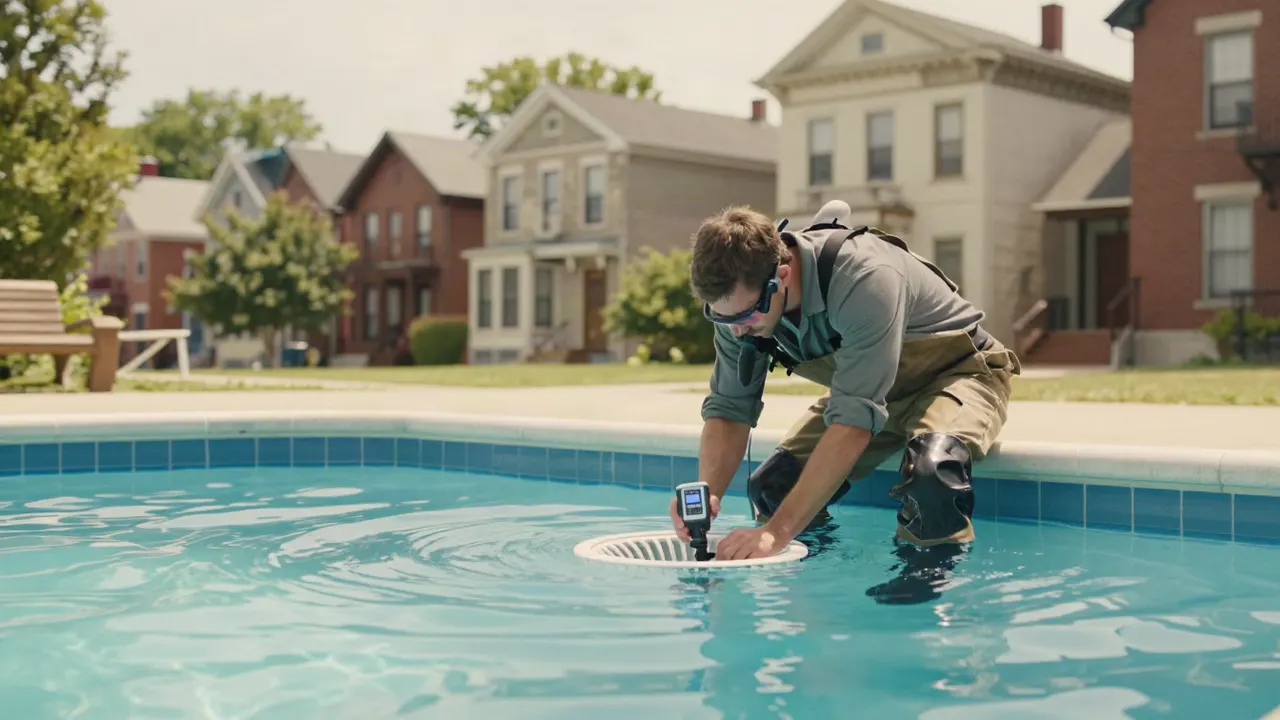
Pool leak detection finds water escaping through the shell, plumbing, or fittings. If your pool loses more than a quarter-inch a day, we pressure-test the lines and use leak detection dye. We serve Pittsburgh pools from Downtown to the North Shore.
View service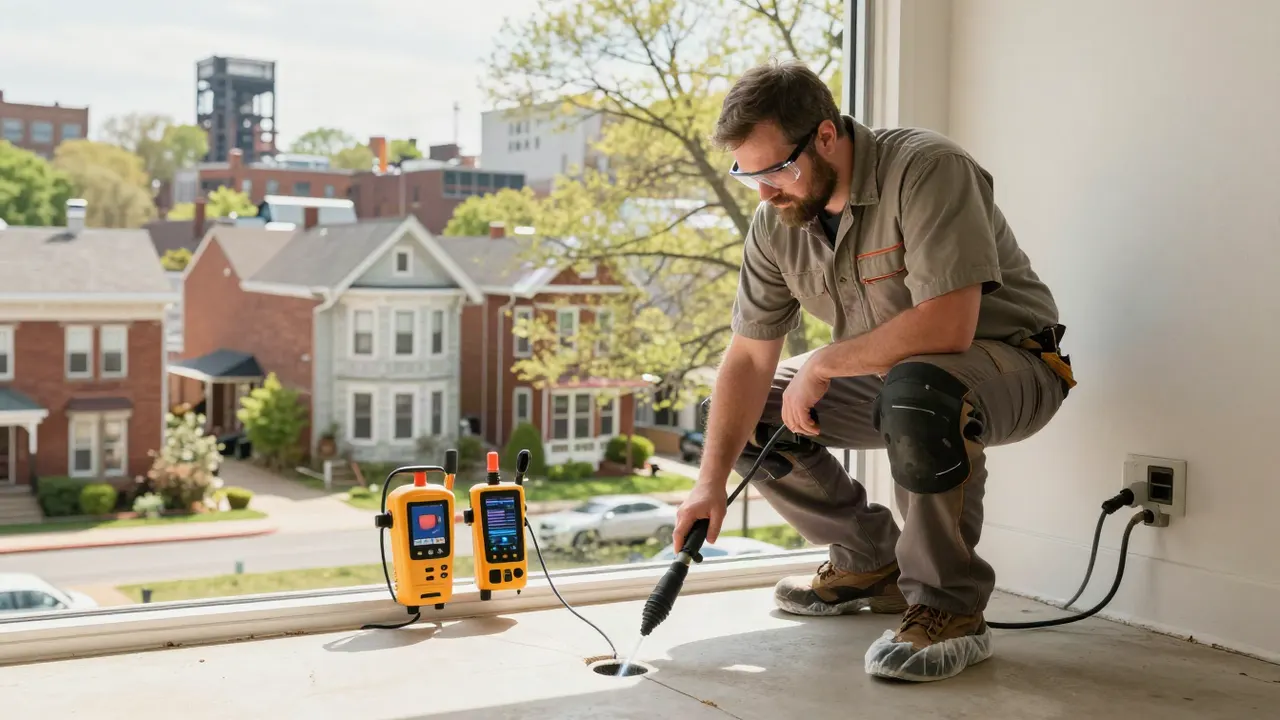
Slab leak detection targets leaks under concrete floors. We use acoustic listening devices and thermal imaging cameras to hear and see the leak before we cut. Common in Pittsburgh's older homes with copper pipe under the slab.
View service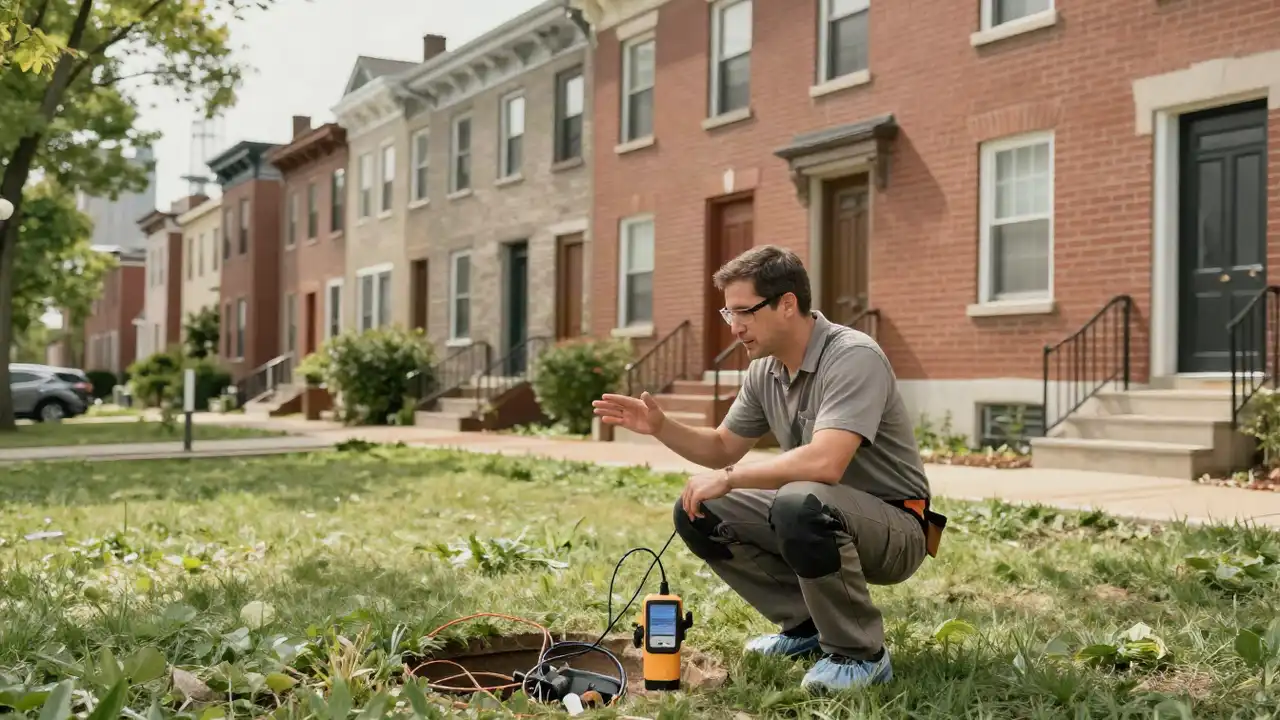
Underground plumbing leak detection maps water and sewer lines with pipe locators and video pipe inspection cameras. If your yard is soggy or your water bill spiked, we find the break without digging up the whole lawn.
View service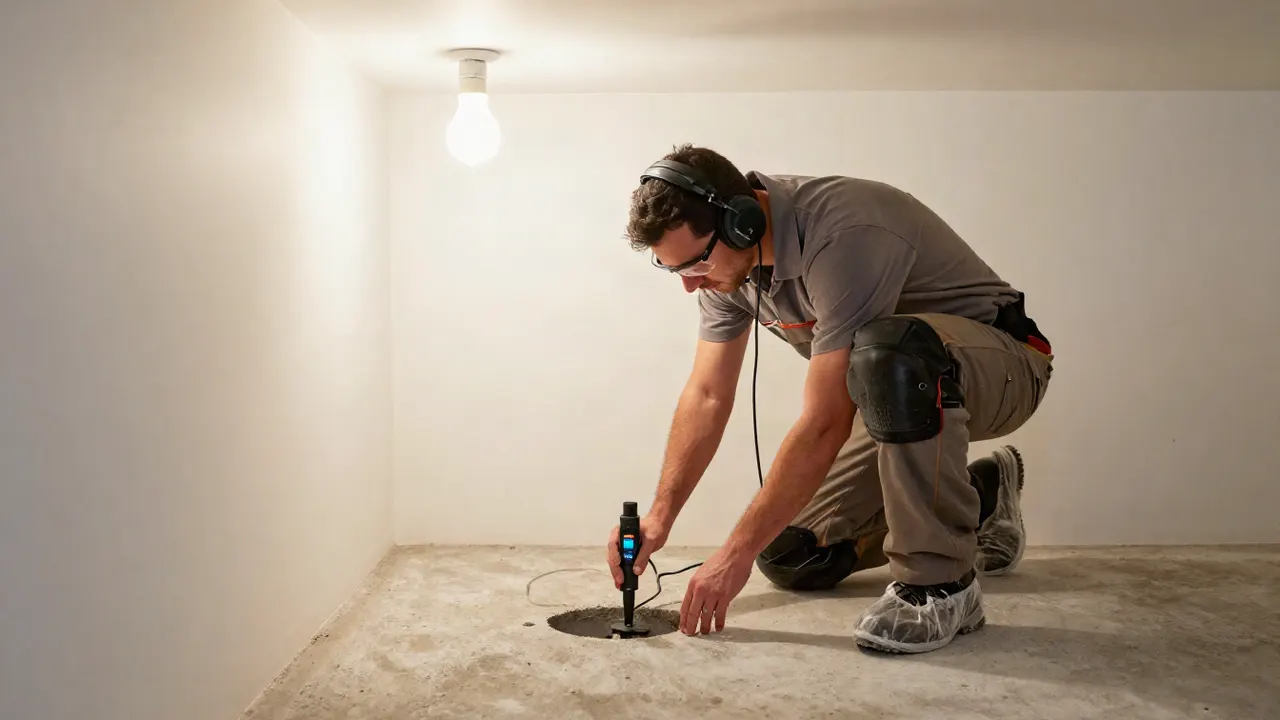
Acoustic leak detection uses ultrasonic leak detectors to hear water escaping pipes behind walls or under slabs. It is the least invasive way to pinpoint a hidden water leak. We pair it with pressure testing kits for confirmation.
View serviceReach us any hour at (412) 939-1638. We answer live, ask a few questions about what you are seeing, and book a window that works. Most Pittsburgh addresses get a same-day slot, and active leaks get priority dispatch.