Focused arrival windows
Useful updates and clear arrival timing.
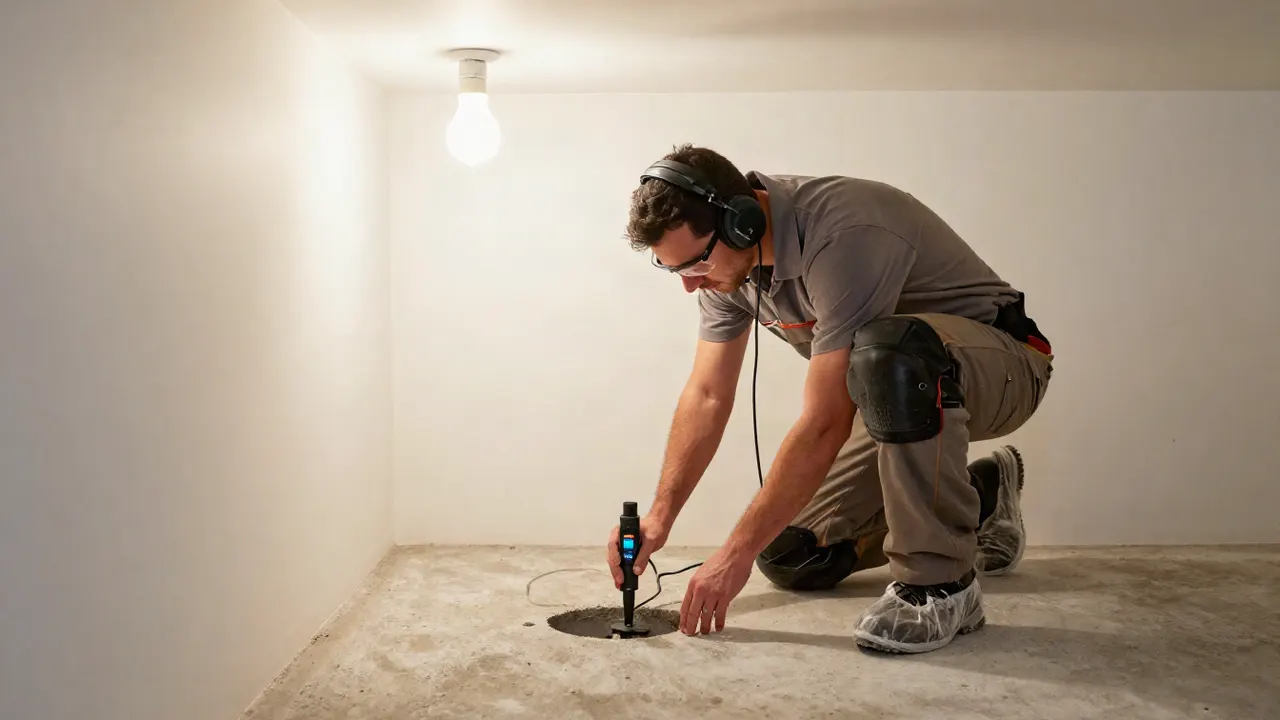
Leak Detection in North Shore starts with a phone call and ends with a dry floor. We cover 15212, 15233, and 15214, from the Mexican War Streets to Chateau, using acoustic listening devices and thermal imaging cameras to pinpoint hidden water leaks without tearing your home apart. Same-day appointments and 24/7 emergency response.
Useful updates and clear arrival timing.
Review the approach and price before deciding.
Equipped vehicles and respectful cleanup.
Neighbors serving neighbors with follow-through.
Leak Detection in North Shore is the work of finding water where it should not be, then fixing the pipe, fitting, or pool shell that let it escape. We work the neighborhoods between the three rivers every week: Chateau, Manchester, Allegheny Center, the Mexican War Streets, and Central Northside. The building stock here is a mix of century-old rowhouses with original copper pipe and newer riverfront construction on PEX tubing, and both fail in different ways. Historic homes hide leaks behind plaster and under original hardwood. Riverfront properties sit on ground that moves with the water table. We carry acoustic listening devices, thermal imaging cameras, and pressure testing kits on every truck, so we can confirm a leak before we open a wall. If you need North Shore Leak Detection after hours, we answer the phone at 2 a.m. the same as at noon. Our technicians hold PA Plumbing License credentials and Allegheny County Plumbing Certification, and we test every repaired line before we pack up.
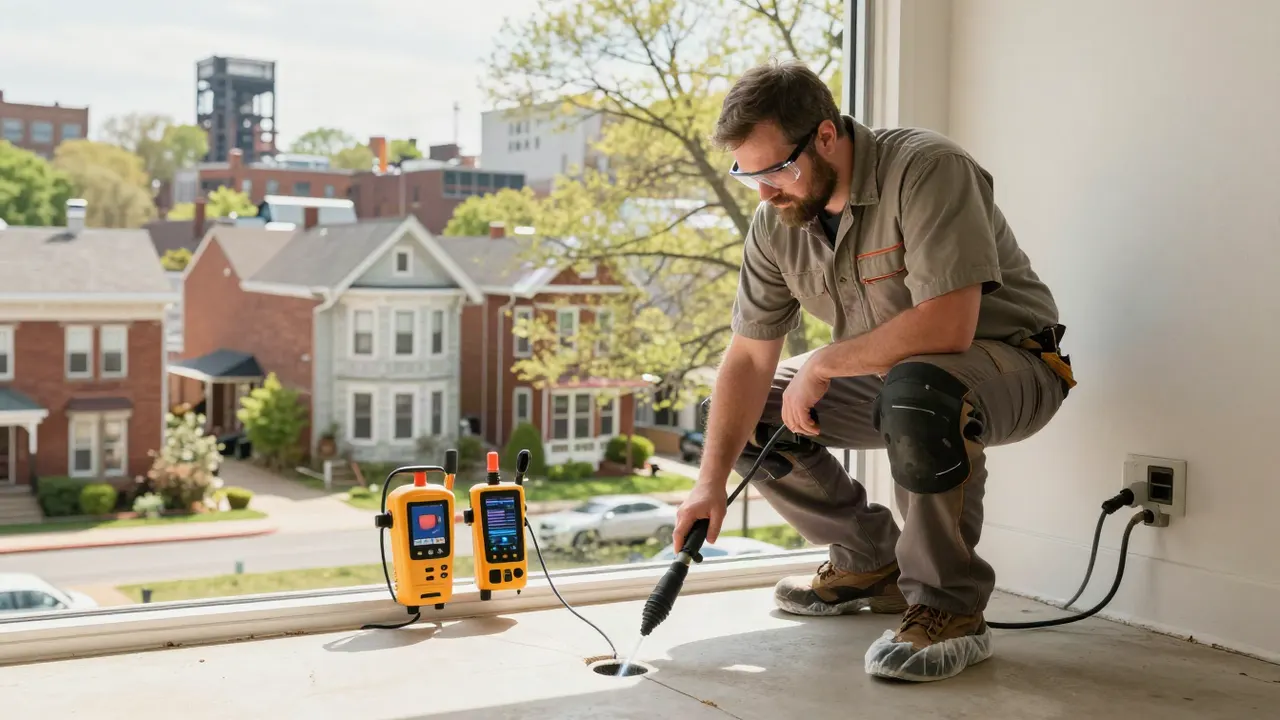
North Shore Leak Detection covers more than a dripping pipe. We run water leak detection on supply lines, pool leak detection on riverfront properties, and slab leak detection in the older rowhouse blocks where copper was run under the concrete. If you have been searching for affordable Leak Detection in North Shore, the cost usually comes down to how hard the leak is to reach, not how hard it is to find. We quote before we start.
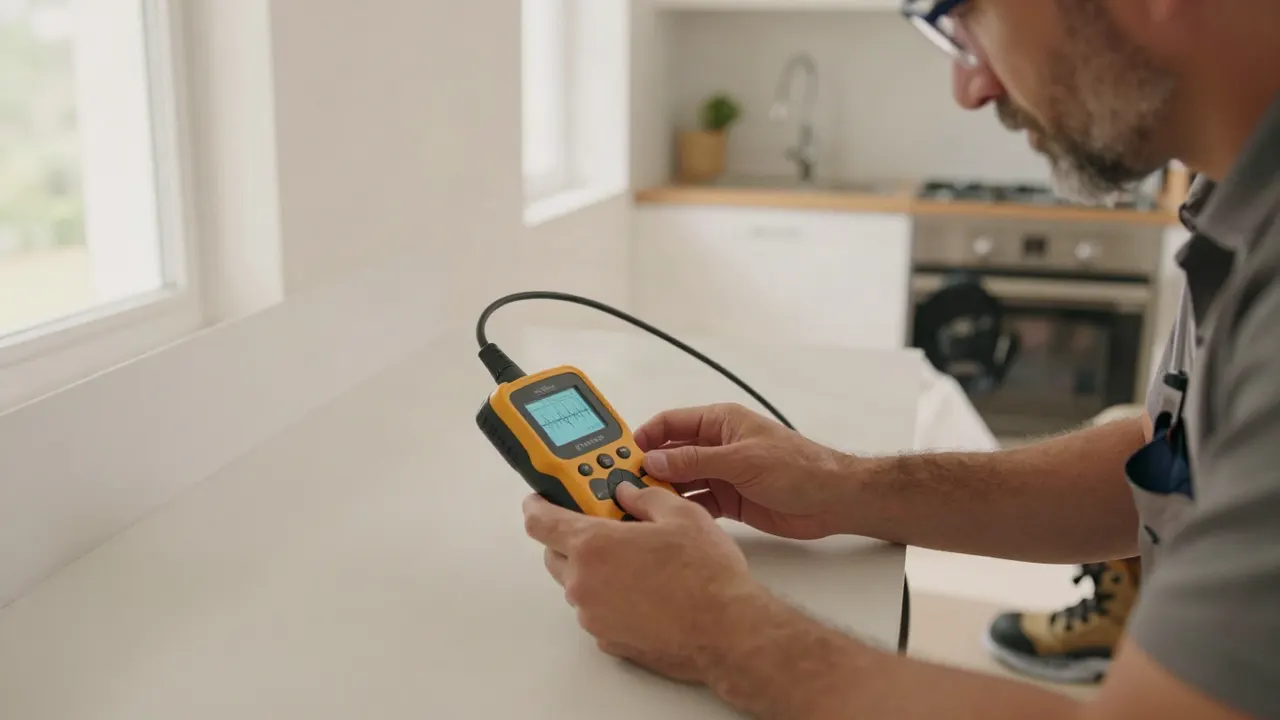
Water leak detection in North Shore starts at the meter. We isolate the supply side, watch the dial, and use acoustic listening devices to hear water moving behind plaster in Mexican War Streets rowhouses or under the finished basements in Allegheny Center. Most hidden water leaks show up in under an hour.
View service →02Pool leak detection North Shore PA work means checking the shell, the fittings, and the buried return lines. Riverfront pools lose water to evaporation and to real leaks, and the two look alike on a hot week. We use leak detection dye and pressure testing kits to separate them before you pay for a repair you do not need.
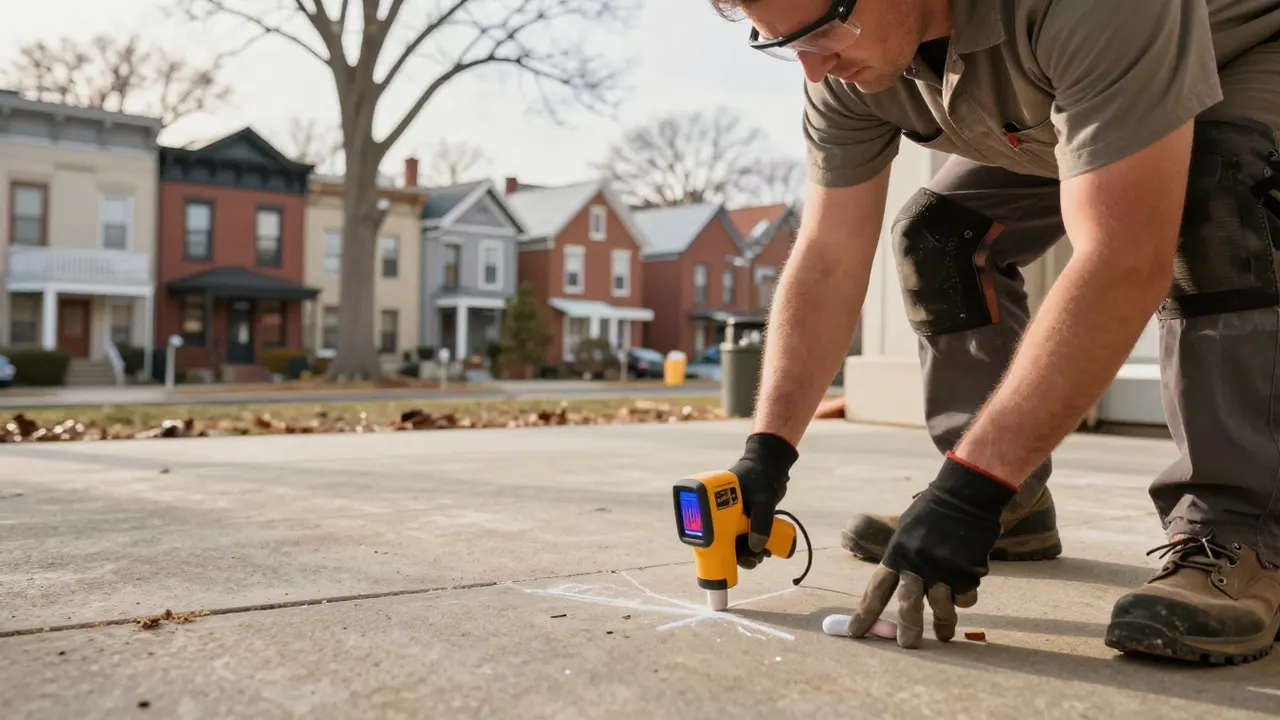
View service →03Slab leak detection North Shore calls come from the older blocks where copper pipe was poured into the foundation. Warm spots on the floor, a water bill that jumps, and the sound of running water with everything shut off are the usual tells. We pinpoint the break with thermal imaging cameras before any concrete comes up.
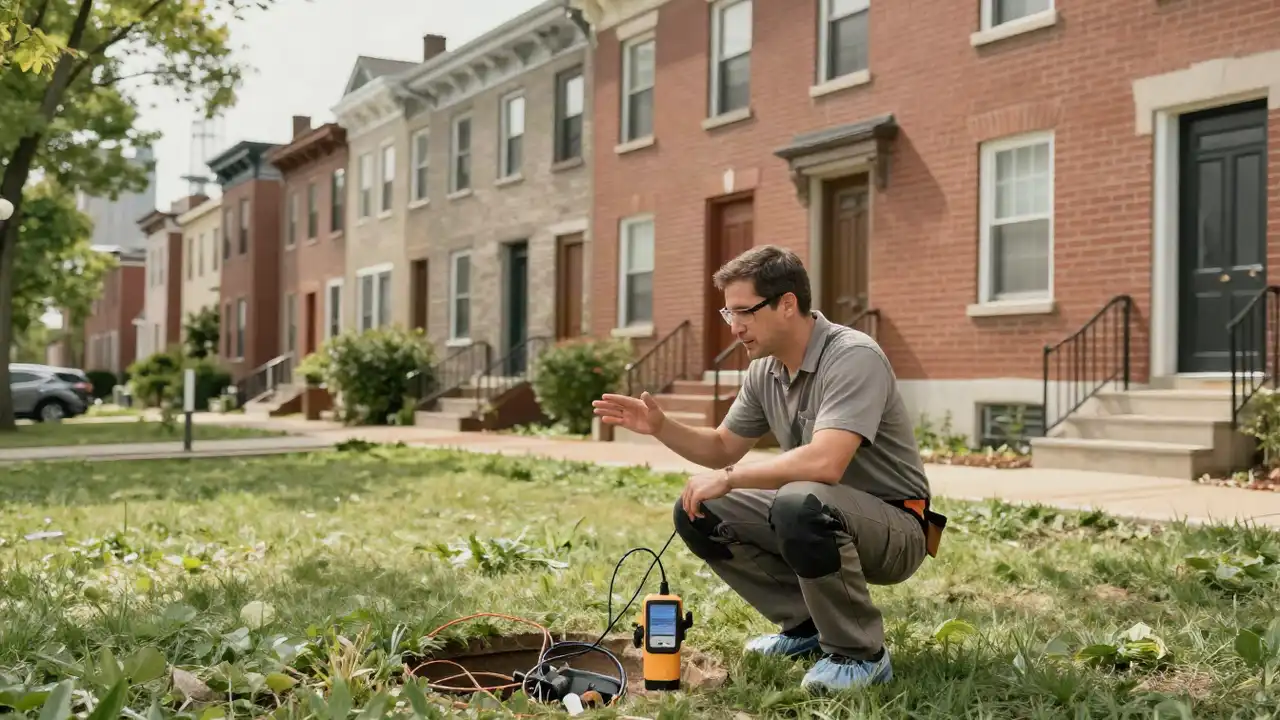
View service →04Underground pipe leaks in North Shore often sit between the house and the curb, under sidewalks and front yards. We use tracer gas detectors and pipe locators to follow the line without digging up the whole yard, then mark the repair point so the excavation stays small.
View service →05Acoustic leak detection is our first tool on almost every call. Ultrasonic leak detectors and RIDGID listening equipment pick up the hiss of pressurized water through concrete, tile, and plaster. In the dense North Shore rowhouse blocks, that means we can find your leak without disturbing the neighbors.
View service →Leak Detection North Shore PA jobs follow a set sequence: interview, isolate, listen, confirm, repair. We ask when you first noticed the water bill climb, then shut the main and watch the meter to prove the leak is on the supply side. From there we bring in acoustic listening devices and thermal imaging cameras, and on slab calls we add pressure testing kits to confirm the break before we cut. North Shore access is its own puzzle. Parking near PNC Park and Heinz Field disappears on game days, so we schedule around the stadium calendar and stage on side streets in Chateau and Manchester when we can. The older rowhouses have narrow shared walls and finished basements, which means we work clean and keep the noise down. Cold snaps below 20 degrees bring a run of frozen-line calls, and we prioritize those because a thawed pipe that split will flood a basement fast. Every repair gets a pressure test and a moisture meter reading before we leave.
Properties close to the Allegheny and Ohio rivers sit on ground that shifts with river levels. That movement opens joints and cracks older service lines, and it can push water into basements that never flooded before. We pressure test the full service line from the main to the meter, not just the visible section. On riverfront addresses we check the curb line and the basement penetration, and we use tracer gas detectors to follow buried runs so we can repair the actual break instead of chasing symptoms.
Mexican War Streets and Central Northside rowhouses still run original pipe behind plaster and under hardwood. Pinhole leaks and failing solder joints are common, and the leak often shows up a floor away from the pipe. We use acoustic listening devices and thermal imaging cameras to trace the water back to the source before opening anything. When we do cut, we keep the opening small and repair with copper or PEX tubing to match the existing system, then test the line under pressure.
North Shore winters drop below 20 degrees often enough to split exposed pipe in unheated spaces. The damage usually shows up on the first warm day, when the ice plug melts and water starts running. We inspect exposed runs in basements and crawl spaces during every winter call, add pipe insulation where it is missing, and flag lines that need heat tape. If a pipe has already split, we repair it and pressure test before restoring water.
Leak repair and pipe replacement in Allegheny County must be done by a licensed plumbing contractor. We hold the credentials, pull the permits when a job requires one, and leave the work code-correct so it passes inspection and does not complicate a future sale.
Commercial properties in the North Shore entertainment district need certified backflow testing and repair. Our technicians carry Backflow Prevention Certification, so we can handle the device while we are already on site for a leak call.
North Shore has a specific set of leak problems that come from its geography, its building stock, and its weather. The peninsula sits between three rivers, the housing ranges from 1800s rowhouses to new riverfront construction, and winters drop below 20 degrees often enough to split pipe. Those three factors drive most of the calls we run here.
Copper supply lines were poured directly into the slab in many mid-century North Shore homes. Decades of thermal expansion and the slight ground movement near the rivers eventually crack the pipe or open a joint, and the water has nowhere to go but up through the floor. We confirm the leak with thermal imaging cameras and pressure testing before any concrete comes up. In most cases we can reroute the line overhead through the joist bay, which avoids breaking the slab entirely and saves the floor.
The service line between the meter and the building sits in soil that shifts with the river water table. Joints separate, older pipe corrodes, and the leak runs underground for weeks before it surfaces as a wet patch or a high bill. We use tracer gas detectors and pipe locators to follow the line without digging it up. Once we mark the break, we excavate a small section, replace the failed pipe, and pressure test the full run before backfilling.
North Shore winters push frost deep, and exposed lines in unheated basements, crawl spaces, and garages freeze. The pipe usually splits at the freeze point, and the damage shows up on the first thaw when water starts running. We repair the split section, pressure test the line, and insulate or heat-trace the exposed run so it does not happen again next winter. We also check nearby lines while we are on site, since freeze damage rarely hits just one spot.
Riverfront pools lose water fast in summer heat and wind. That makes a real leak in a fitting or return line easy to miss until the water loss gets expensive or the surrounding ground stays saturated. We use leak detection dye and pressure testing kits to test the shell, fittings, and buried lines separately. That tells us exactly where the water is going, so you only pay for the repair you actually need.
Typical 2026 pricing for Leak Detection in North Shore runs $180 to $450 for the detection visit, depending on how many lines we have to isolate and whether the leak is inside or underground. A straightforward supply-line leak in a rowhouse sits at the low end. Slab leaks, pool leaks, and buried service lines sit higher because they take more equipment and more time to confirm. Repair work is quoted separately once we know what failed. We give you the detection price before we start, and if we find the leak in the first 20 minutes, you pay the same as if it took an hour. Emergency and after-hours calls carry a higher rate, and we tell you that on the phone.
A leak behind an accessible basement wall is quick to confirm. A slab leak or a buried service line under a sidewalk takes thermal imaging, tracer gas, and sometimes excavation, which adds time and equipment to the job.
Original galvanized and copper pipe in North Shore rowhouses fails differently than modern PEX. Older systems often need more isolation steps to rule out multiple small leaks before we commit to a repair point.
Game days, event nights, and narrow shared-wall rowhouses slow a job down. Commercial properties in the sports district often need after-hours scheduling, which affects the rate.
North Shore is easy to describe and hard to park in. We use the big landmarks as orientation points when we dispatch: PNC Park and Heinz Field anchor the east and west ends of the sports district, and the Carnegie Science Center and The Andy Warhol Museum sit along the riverfront corridor. When a customer says they are near the National Aviary, we know to come in off Arch Street. Game days and concert nights at Rivers Casino change the traffic pattern completely, so we check the event calendar before we route a truck through the district.
PNC Park anchors the east end of the North Shore sports district. We use it as a dispatch reference point for addresses on the Federal Street and General Robinson Street corridors, and we route around it on game days.
Heinz Field sits west of PNC Park along the riverfront. It marks the boundary between the sports district and the Chateau industrial area, which helps us pick the right approach road for a call.
The Carnegie Science Center sits on the Ohio River at the western end of North Shore. It is a useful orientation point for riverfront addresses and for the West End approach.
The Andy Warhol Museum sits on Sandusky Street near the Seventh Street Bridge. We use it to orient calls on the eastern edge of the North Shore, close to Downtown Pittsburgh.
The National Aviary is on Arch Street in the Central Northside. It is our reference point for rowhouse calls in the Mexican War Streets and the surrounding blocks.
Rivers Casino sits on the Ohio River at the western riverfront. Evening traffic and valet queues there change how we route trucks through Chateau and the western North Shore.
The district around PNC Park and Heinz Field concentrates restaurants, bars, and event venues with high daily water demand. Commercial leak calls here need to be scheduled around event hours so we are not working in a packed building.
Chateau runs along the river with warehouses, light industrial sites, and larger service mains. Leaks on these properties are often underground and show up first on the water bill rather than on the floor.
The light rail line runs under the river into the North Shore, with stations near Allegheny Center and the stadiums. We use those station locations as quick reference points when dispatching.
I-279 and the bridge approaches feed traffic onto the North Shore from Downtown and the north suburbs. We plan routes around rush hour and stadium egress so a call does not sit in gridlock.
We run leak calls across the North Shore peninsula, from the historic rowhouse blocks to the newer riverfront buildings. If you are in 15212, 15233, or 15214, we have likely already worked on your block or one like it.
These restored rowhouses are beautiful and full of original plumbing. Copper supply lines run behind plaster, and slow pinhole leaks often show up as a stained ceiling on the floor below. We know the wall assemblies here and open them carefully. Minutes from our Allegheny Center staging point, so we can usually be on site within the hour.
Manchester has a mix of large historic homes and newer infill, which means both original galvanized pipe and modern PEX tubing on the same block. We check the service line and the interior runs separately because the failure modes are different. A short run west on Ridge Avenue, with easy street parking on most blocks.
Apartment and commercial buildings here share walls and mechanical rooms, so a leak on one floor can show up three units away. We coordinate with building management and use acoustic listening devices to isolate the unit before anyone opens a ceiling. Our closest staging area, which makes Allegheny Center one of our fastest response zones.
Chateau is industrial and commercial, with larger water lines and higher demand. Leaks here tend to be on service mains and irrigation lines, and they can run for weeks before anyone notices the meter moving. Just up the riverfront, reachable in minutes via West Carson Street.
These are the kinds of calls we run every week on the North Shore peninsula. Each one started with a symptom the customer could see or hear, and each one ended with a confirmed repair and a dry floor.
A Mexican War Streets homeowner had a water bill that jumped by $90 in one quarter with no visible leak anywhere in the house. We shut the main and watched the meter, which confirmed a supply-side leak. Acoustic listening devices narrowed it to a pinhole in the copper line running behind the kitchen wall. We opened a small section of plaster, replaced the failed section with new copper, and pressure tested the line. The leak was repaired in a single visit, the wall was patched, and the next water bill returned to its normal range.
A Chateau commercial property showed a steadily rising water bill and a wet patch in the parking area that never dried out. We used tracer gas detectors and pipe locators to follow the buried service line from the meter to the building. The break was under the asphalt about 20 feet from the foundation. We marked the repair point, excavated a small section, replaced the failed pipe, and restored the surface. The underground leak was fixed without digging up the whole lot, and the property stopped losing water within a day.
A riverfront property near the Carnegie Science Center had a warm spot on the basement slab and the sound of running water with every fixture shut off. Thermal imaging cameras confirmed a slab leak under the basement floor. We used pressure testing kits to isolate the hot-water line, then rerouted the affected run overhead through the joist bay instead of breaking out the slab. The slab leak was bypassed in one day, the floor stayed intact, and the moisture meter readings returned to normal within 48 hours.
Our water bill doubled and we could not find the leak. The tech shut the main, listened with his equipment, and had it narrowed to a pipe behind the bathroom wall in about 40 minutes. He cut a small opening, fixed the copper, and tested it before he left. No mess, no guesswork.
We manage a building in Allegheny Center and had water showing up in a unit two floors below the source. They worked with our maintenance team, isolated the right unit with acoustic gear, and repaired the line the same day. Clear pricing before they started.
Called on a Sunday when our pool was losing an inch a day. They came out, used dye and pressure testing to prove it was a fitting and not evaporation, and fixed it that week. Straight answers and no upsell on a liner we did not need.
Leak Detection in North Shore is a year-round job, but the type of call changes with the season. Fall is when we start winterizing, winter brings freeze calls, spring exposes what the frost did, and summer is pool and irrigation season. Here is what to expect and what to do about it.
Thawing ground exposes the damage winter left behind. Split pipes that stayed frozen all season start running, and basements that were dry in February get wet in March. Riverfront properties see the water table rise with spring rain.
Pool and irrigation leaks dominate. Riverfront pools lose water to heat and wind, which hides real leaks in fittings and return lines. Irrigation systems run daily and a broken zone head can waste hundreds of gallons a week.
This is winterizing season. Exposed lines in unheated basements and crawl spaces need insulation before the first hard freeze. Older North Shore rowhouses with unheated rear additions are the highest-risk properties.
Freeze and split-pipe calls spike, especially during extended cold snaps below 20 degrees. Slab leaks also get noticed more because warm spots on the floor are easier to feel against cold concrete.
North Shore is one half of our core service area, with Downtown Pittsburgh just across the river. We run trucks on both sides of the water, so a leak call in either place gets the same crew and the same equipment. If you are on the North Shore and we are already Downtown, you are minutes away, not hours.
Not every leak call needs the same crew. Some companies send a technician with a flashlight and a guess, and you pay for the exploratory demolition. Before you hire anyone in North Shore, ask these five questions. The answers tell you whether you are getting a leak detection specialist or a general plumber who will figure it out on your dime.
A real leak detection company carries acoustic listening devices, thermal imaging cameras, and pressure testing kits on the truck. If the answer is a flashlight and a hunch, you are paying for guesswork and possibly unnecessary demolition.
Leak repair and pipe replacement in Allegheny County require a licensed plumbing contractor. Ask for the PA Plumbing License and Allegheny County Plumbing Certification. Unlicensed work can fail inspection and complicate a future home sale.
You should know the detection cost before anyone opens a wall. A company that quotes after the fact controls the number. We quote the detection visit up front, and the repair is a separate, clearly priced step.
A repair that is not pressure tested is a guess. Ask whether they test the line before restoring water and whether they check the moisture level in the affected area. That is how you know the leak is actually fixed.
Leaks do not wait for business hours. A split pipe at 2 a.m. or a slab leak discovered on a Sunday needs a crew that answers the phone. Ask whether they run 24/7 and whether the after-hours rate is disclosed up front.
International Association of Plumbing and Mechanical Officials
Pennsylvania Department of Environmental Protection
$2M general liability
member
member
Most detection visits in North Shore run $180 to $450 in 2026, depending on whether the leak is inside or underground. A simple supply-line leak sits at the low end. Slab leaks, pool leaks, and buried service lines sit higher because they take more equipment. We quote the detection price before we start, and repair work is priced separately once we know what failed.
The best Leak Detection North Shore company is the one that finds the leak without tearing your house apart and proves the repair with a pressure test. Ask any contractor what equipment they carry, whether they hold a PA Plumbing License, and whether they test the line before leaving. We answer all three, and we work the North Shore peninsula every week.
Yes. We answer the phone 24/7 for emergency Leak Detection North Shore near me calls, including frozen and split pipes overnight. If you shut the main and the meter still moves, or you hear water running with everything off, call us. We prioritize active leaks because a split pipe can flood a basement in hours.
Shut off every fixture and appliance, then watch your water meter. If the dial still moves, you have a supply-side leak. Check the basement and crawl space for damp patches, and feel the floor for warm spots that could be a slab leak. If you cannot narrow it down, water leak detection with acoustic and thermal equipment finds it in under an hour.
We can usually place a same-day Leak Detection North Shore PA visit if you call before early afternoon. If you are in 15212, 15233, or 15214, ask about our fastest window when you call. Emergency calls go to the front of the line, and we stage trucks near Allegheny Center so we can reach most North Shore addresses quickly.
Not seeing your question? Our local team can help you understand urgency, scheduling and what to expect.
Ask the local team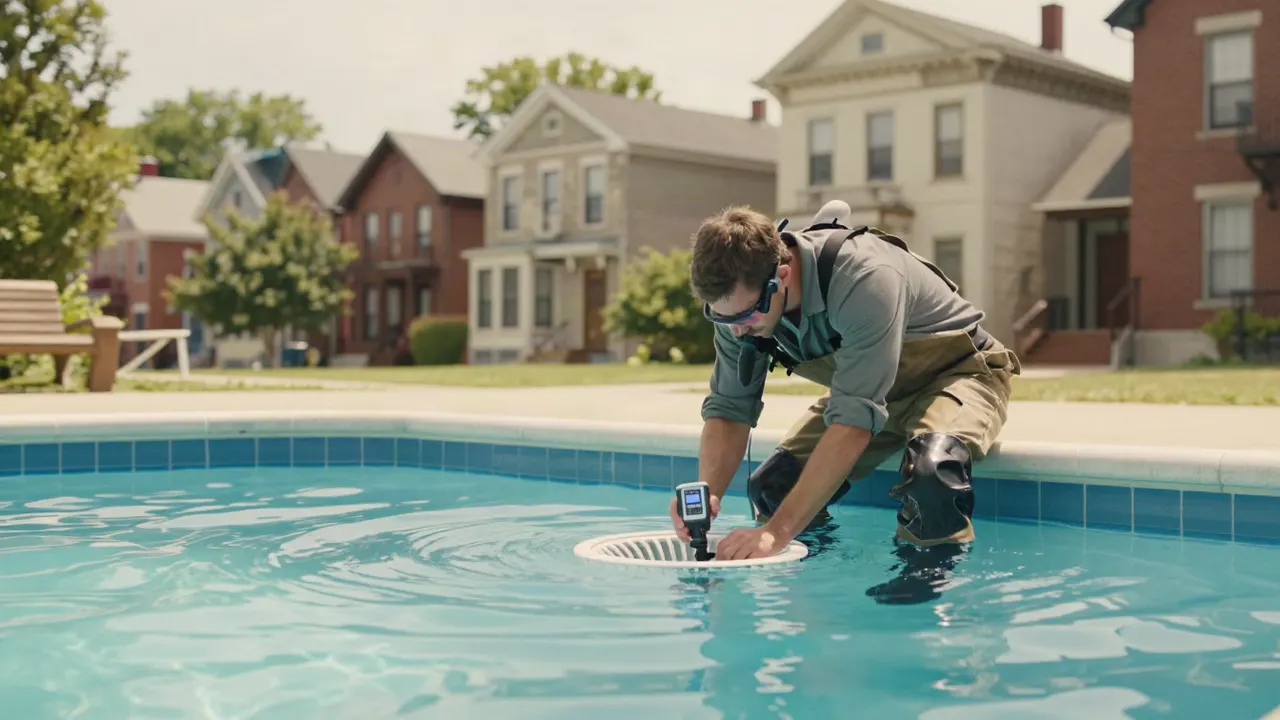
Reach us any hour at (412) 939-1638. We answer live, ask a few questions about what you are seeing, and book a window that works. Most Pittsburgh addresses get a same-day slot, and active leaks get priority dispatch.