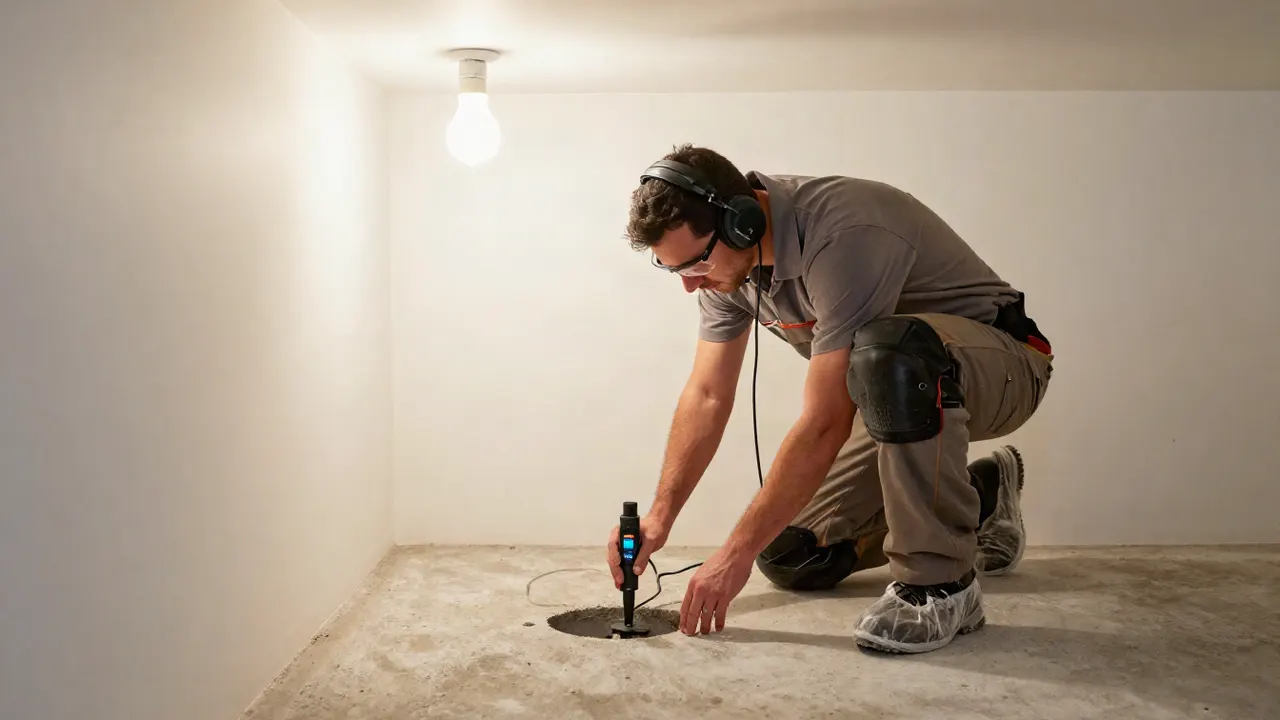
Why is my pool losing water in Pittsburgh
If your pool is losing more than a quarter-inch of water a day in Pittsburgh, you likely have a leak. Here is how to tell, what causes it, and who fixes it.
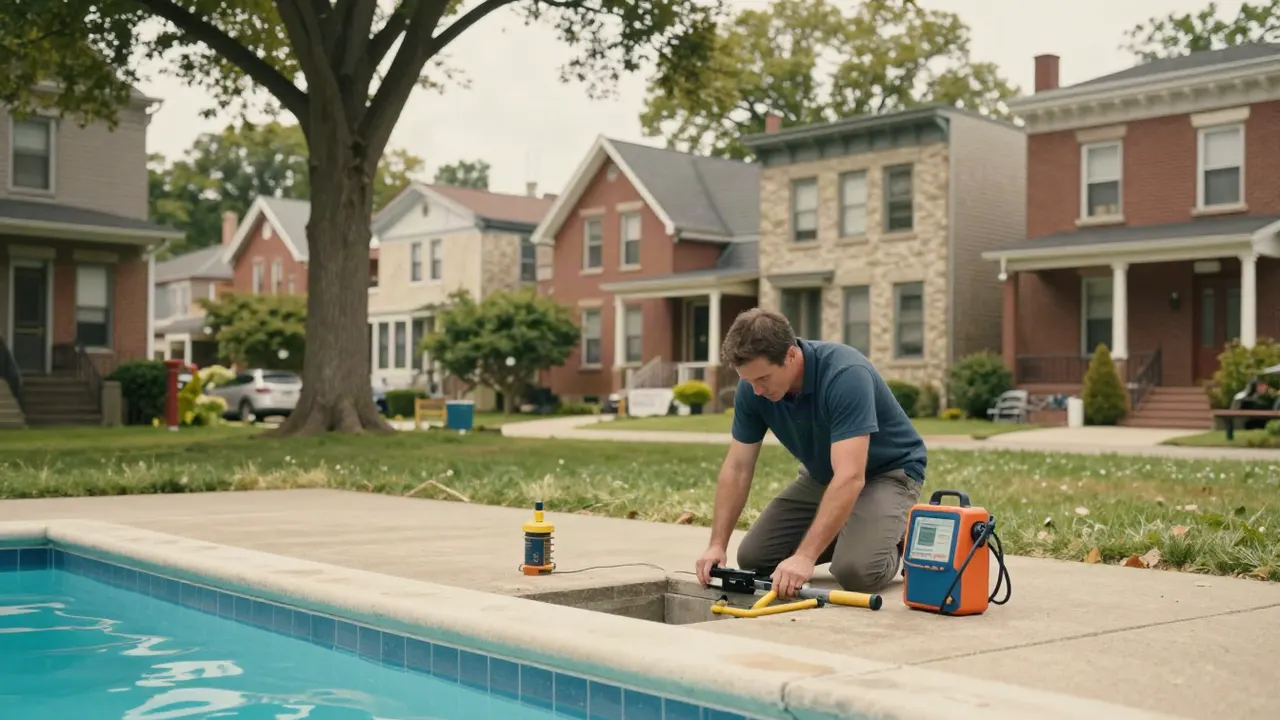
Your pool is losing water in Pittsburgh because it is leaking - not evaporating. A pool that drops more than a quarter-inch per day in our climate has a leak somewhere in the shell, plumbing, or equipment pad. Normal evaporation in Pittsburgh is about an eighth to a quarter inch daily, and it slows down in September and October as temperatures fall. If you are adding water every couple of days, you have a problem worth fixing before winter.
We are Leak Fix Pros, a local leak detection company. We find pool leaks without draining your pool or tearing up your deck. This article covers how much water loss is normal here, the most common causes of pool leaks in Pittsburgh, how to test for a leak yourself, and when to bring in a pro.
How much water loss is normal for a pool in Pittsburgh
Normal water loss for a Pittsburgh pool is one-eighth to one-quarter inch per day, driven by evaporation and splash-out. That is roughly one to two inches per week in July, dropping to half an inch per week by October. Anything beyond that - especially more than two inches in a week - points to a leak.
Evaporation depends on three things: water temperature, air temperature, and wind. A heated pool loses more water than an unheated one. A windy ridge-top pool in Mt. Washington loses more than a pool tucked behind a fence in Shadyside. But evaporation never explains a pool that drops three inches overnight.
Here is a quick reference for Pittsburgh pool owners:
- 1/8 inch per day - normal evaporation in summer.
- 1/4 inch per day - high end of normal, common in windy or heated pools.
- 1/2 inch per day - likely a leak; investigate.
- 1 inch or more per day - definite leak; call a professional.
If you are unsure, mark your water level with a piece of tape on the skimmer throat at the same time each day. If it drops more than a quarter inch in 24 hours with the pump off, you have a leak.
The most common causes of pool leaks in Pittsburgh
The most common causes of pool leaks in Pittsburgh are failing shaft seals on the pump, cracked skimmer throats, and separated return fittings. Our freeze-thaw cycles are hard on pool plumbing, and most leaks we find are at these three points.
Here is what we see most often, ranked by frequency:
- Pump shaft seal failure. A worn seal drips water onto the equipment pad. You will see a puddle under the pump or rust streaks on the motor housing.
- Skimmer throat cracks. The plastic skimmer body cracks where it meets the concrete or liner. Water escapes into the ground behind the pool wall.
- Return fitting leaks. The threaded fittings where water returns to the pool loosen or crack. Look for wet spots on the deck or a persistent drop in water level when the pump runs.
- Light niche leaks. The seal around the pool light can fail, especially in older pools. Water seeps behind the niche.
- Liner tears or wrinkles. Vinyl liners can tear at the seams or around fittings. A tear below the waterline will leak steadily.
- Plumbing line breaks. Underground lines crack from shifting soil or freeze-thaw movement. These are the hardest to find without professional equipment.
We also see leaks at the main drain, the hydrostatic relief valve, and the pool shell itself. If your pool is losing water and you cannot see an obvious drip, the leak is likely underground or behind the shell.
For homeowners dealing with similar hidden leaks inside the house, our water leak detection Pittsburgh service uses the same acoustic and thermal tools we bring to pool calls.
How to tell if your pool is leaking in Pittsburgh
You can tell if your pool is leaking in Pittsburgh by running a simple bucket test. Fill a bucket with pool water, set it on the top step, mark the level in both the bucket and the pool, and wait 24 hours. If the pool drops more than the bucket, you have a leak.
The bucket test is the most reliable DIY method because it accounts for evaporation. Here is how to do it right:
- Fill a plastic bucket with pool water to within an inch of the top.
- Set the bucket on the top step or a floating platform so the water inside is at the same temperature as the pool.
- Mark the water level inside the bucket and on the pool wall.
- Run the pump for 24 hours as you normally would.
- Compare the two levels. If the pool dropped more than the bucket, call a pro.
You can also check for these signs:
- Wet spots on the deck or grass that never dry.
- Air bubbles in the pump basket or return lines.
- Higher-than-normal water bills or chemical costs.
- Loose tiles or cracks in the pool shell.
- Water level drops faster when the pump is running (points to a pressure-side leak).
If the water level drops faster with the pump off, the leak is likely on the suction side. If it drops faster with the pump on, it is on the return side. That distinction saves time when we arrive.
How to find a pool leak in Pittsburgh
Finding a pool leak in Pittsburgh starts with pressure testing the plumbing lines and visually inspecting the shell, skimmer, and equipment pad. We use acoustic listening equipment, dye testing, and thermal imaging to pinpoint the leak without draining the pool.
Our process looks like this:
- Visual inspection. We check the pump, filter, heater, skimmer, returns, lights, and main drain for obvious signs.
- Dye test. We inject a small amount of dye near suspect areas. If the dye gets pulled into a crack or fitting, we have found the leak.
- Pressure test. We plug the lines and pressurize them to see if they hold. A drop in pressure tells us which line is leaking.
- Acoustic listening. We use a microphone designed to hear water escaping through soil or concrete. This is how we find underground leaks without digging.
- Thermal imaging. An infrared camera shows temperature differences caused by moving water, which helps confirm the leak location.
Most pool leak detection calls in Pittsburgh take one to two hours. We give you a written report with the leak location and a repair plan. If the leak is underground, we can often repair it with minimal digging.
For leaks under the pool deck or patio, we sometimes use the same techniques as our slab leak detection Pittsburgh service. The tools overlap more than you would think.
What to watch out for: common mistakes
The biggest mistake pool owners make is adding water and hoping the problem goes away. A small leak becomes a big one when freeze-thaw cycles widen the crack. Here are other mistakes we see:
- Assuming it is evaporation. If you are adding water more than once a week, it is not evaporation.
- Using leak sealant products. These can temporarily plug a leak but often damage equipment and rarely fix the root cause.
- Draining the pool to find the leak. You do not need to drain a pool to find a leak. Draining can cause the shell to shift or crack, especially in our clay soils.
- Ignoring the equipment pad. A dripping pump seal can waste hundreds of gallons a week and rust out the motor.
- Waiting until spring. A leak that goes into winter can cause serious damage when water freezes behind the pool wall.
We also see homeowners dig up the deck looking for a leak and miss it by three feet. Acoustic equipment pays for itself in avoided demolition.
When to call a professional
Call a professional when your pool loses more than a quarter inch of water per day, when you see wet spots that never dry, or when your water bill jumps by more than 10 percent. Those are the thresholds where DIY guessing costs more than a professional leak detection call.
We handle pool leak detection and repair across Pittsburgh. Our technicians are state-licensed and carry the equipment to find leaks without draining your pool or tearing up your deck. We find the leak, fix it, and test the line before we leave.
If you are also dealing with a leak inside the house, we offer acoustic leak detection Pittsburgh for hidden pipes behind walls and under floors.
We work throughout the city, including older neighborhoods where shifting soil and aging plumbing are common. For pools and plumbing in the Golden Triangle, our Leak Detection in Downtown Pittsburgh team knows the building stock and the soil conditions.
Frequently Asked Questions
Why is my pool losing water in Pittsburgh?
Your pool is losing water because of a leak, not evaporation, if it drops more than a quarter inch per day. Common causes include pump shaft seals, skimmer cracks, return fittings, and underground plumbing breaks. Pittsburgh freeze-thaw cycles make these worse.
How much water loss is normal for a pool in Pittsburgh?
Normal evaporation in Pittsburgh is one-eighth to one-quarter inch per day, or about one to two inches per week in summer. Anything over two inches per week, or a drop that continues in cool weather, indicates a leak.
How do I find a pool leak in Pittsburgh PA?
Start with a bucket test: fill a bucket with pool water, mark both levels, and wait 24 hours. If the pool drops more than the bucket, you have a leak. For underground leaks, call a professional with acoustic and pressure-testing equipment.
Who fixes pool leaks in Pittsburgh?
Leak Fix Pros fixes pool leaks in Pittsburgh. We are a local leak detection company with state-licensed technicians. We find the leak, repair it, and test the line before we leave. Call us at (412) 939-1638.
How much does pool leak detection cost in Pittsburgh PA?
Typical 2026 pricing for pool leak detection in Pittsburgh ranges from $250 to $450, depending on the pool size and whether underground lines need testing. Repairs are quoted separately after we find the leak.
Get help with Leak Detection in Pittsburgh
If your pool is losing water and you are tired of guessing, we can help. We find leaks fast and fix them right the first time.
Call Leak Fix Pros at (412) 939-1638 to schedule your pool leak detection in Pittsburgh.